Introduction: Are you suffering from severe shoulder pain that awakens you from sleep at night? Do you find it difficult to comb your hair or reach for an object on a high shelf? If your answer is yes, these symptoms may indicate an issue with your rotator cuff, specifically a tendon tear. The shoulder is one of the most mobile and complex joints in the human body, and these tendons play a crucial role in maintaining its stability and functionality.
What is the Rotator Cuff and What Causes It to Tear? The rotator cuff is a group of four muscles and tendons that surround the shoulder joint, securing the head of the upper arm bone firmly within the shallow socket of the shoulder. A tear typically occurs due to two primary reasons: either an acute, sudden injury (such as falling on an outstretched arm or lifting heavy weights incorrectly at the gym) or chronic, progressive wear and tear linked to aging and repetitive use—a condition frequently seen in professions requiring overhead activity or among specific athletes.
Modern Scientific Approaches in Diagnosis and Conservative Management: In our clinic, we adopt an integrated approach that begins with a thorough clinical examination, supported by Magnetic Resonance Imaging (MRI). This is backed by our ongoing clinical research on the utilization of ultrasound to accurately diagnose shoulder impingement syndromes and tendon pathology. For mild or partial tears, we implement structured conservative treatment plans involving intensive physical therapy, anti-inflammatory medications, and advanced joint injections to relieve pain and improve joint function.
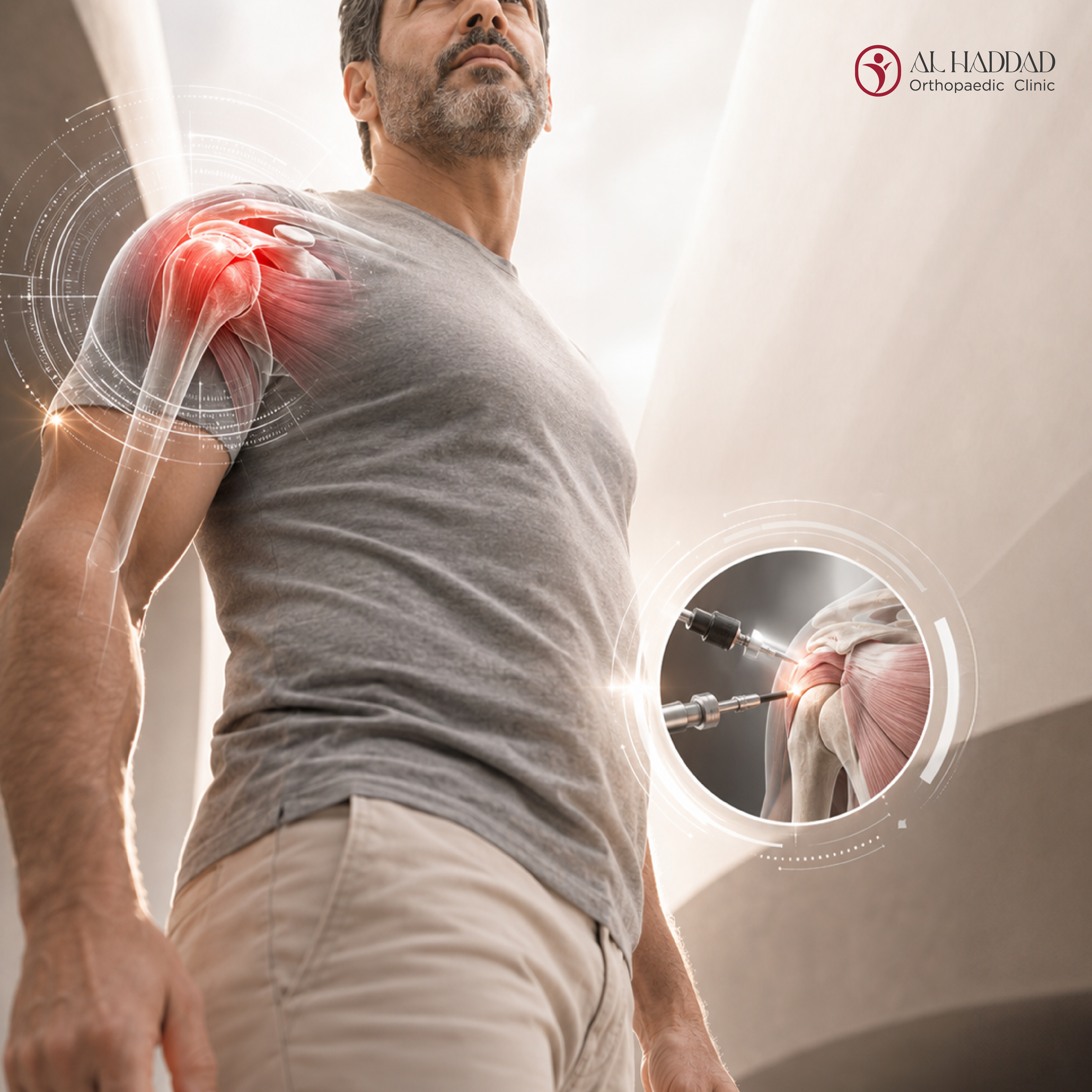
The Revolution of Advanced Shoulder Arthroscopy (Keyhole Surgery): When conservative solutions fail, or in cases of acute, full-thickness tears, surgical intervention becomes a necessity to reconstruct the tendon, prevent chronic muscle wasting, and avoid premature joint degeneration. Leveraging specialized fellowship training in Shoulder and Upper Extremity Surgery from McMaster University in Canada, we perform these reconstructions with extreme precision using an arthroscope through minute incisions (not exceeding 1 cm).
Compared to traditional open surgery, arthroscopic rotator cuff repair offers profound benefits:
- Preservation of the surrounding healthy shoulder muscles without needing to cut through them.
- Significantly reduced post-operative surgical pain.
- Muted risks of infection or localized hematomas.
- A minimized recovery timeline, allowing the patient to safely initiate guided rehabilitation to regain arm strength.
Final Advice: Ignoring shoulder pain or dismissing it as “temporary fatigue” can cause the tear to widen over time, leading to a retracted tendon that is much harder to repair. Consulting a specialized surgeon early is the first step toward reclaiming a pain-free, fully functional shoulder.